Start with the homeowner’s own observations.
01No forced diagnosis and no equipment jargon required. The description stays visible so dispatch can see exactly what the customer said.

Heating, cooling, plumbing, electrical, and indoor air—understood as one living system. Tell us what you observe. We turn it into a safer, technician-ready next step.
Observe.
Organize.
Dispatch.
We connect customer-stated symptoms, equipment context, access notes, and previous service details before a visit—without pretending an online intake can diagnose the equipment.
When explicit danger language appears, the normal workflow stops. Safety guidance takes over. No appointment, troubleshooting script, or AI guess outranks leaving the area.
Choose a service family to preview what the intake collects and how the right field team gets prepared.
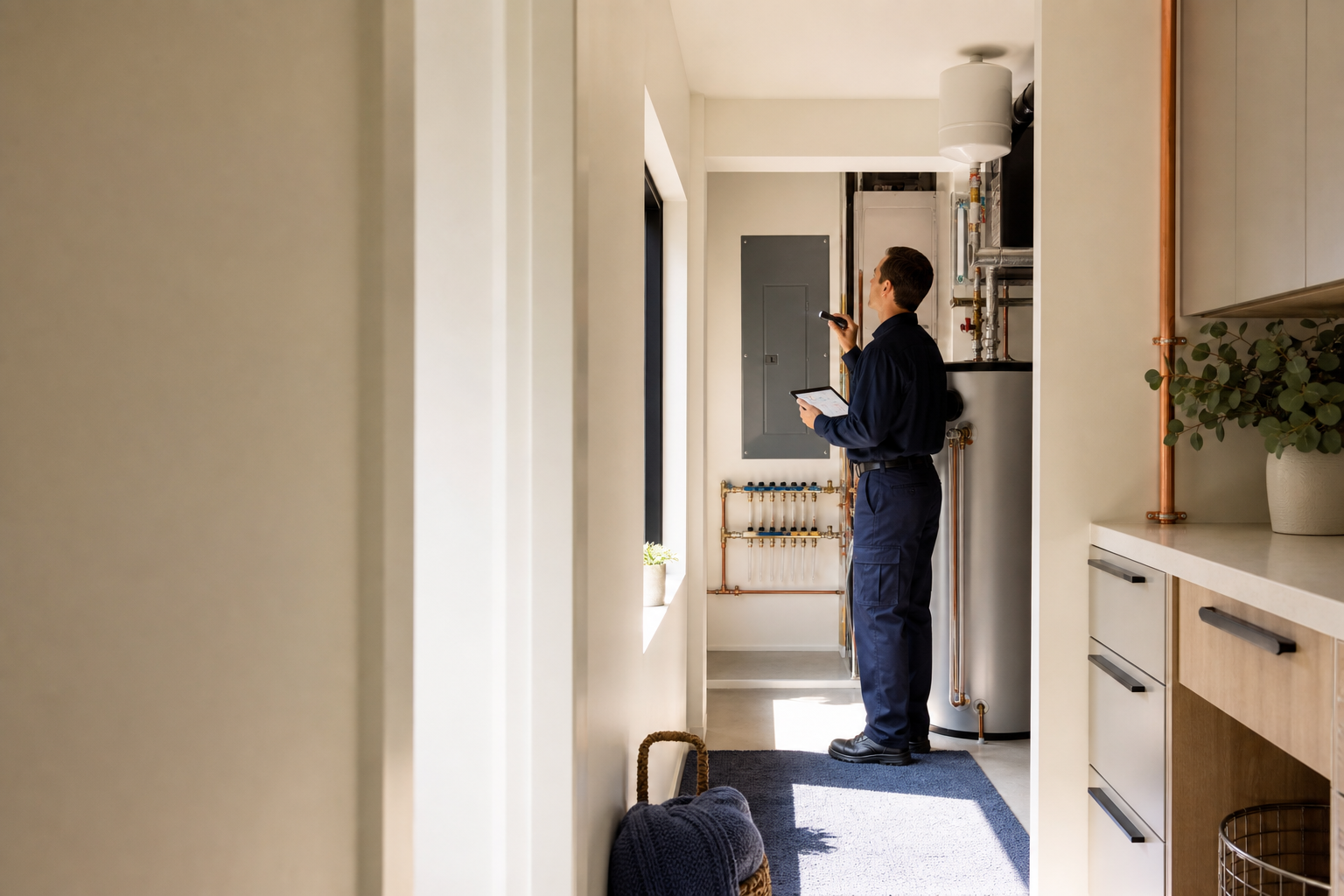
The intake can carry the system age, areas affected, what the customer sees or hears, access details, and an optional equipment-label file into a heating work-order draft.
No forced diagnosis and no equipment jargon required. The description stays visible so dispatch can see exactly what the customer said.
Gas odor, carbon monoxide, smoke, flames, sparking, electrical burning, or a person in immediate distress triggers emergency guidance instead of booking.
Service family, affected area, age band, observed details, attachment status, access, availability, and open questions become a readable work order.
A person verifies safety, urgency, technician skill, timing, coverage, and customer communication before anything is treated as dispatched.
Browser-local account conceptA useful service plan is more than a discount. It is a living record that helps the customer and technician begin the next visit with the same context.
Plain-language prompts gather useful observations without asking a stressed customer to identify the failed part.
The draft separates what was observed, what is missing, what may need confirmation, and which field skill should review it.
Emergency language stops normal scheduling. The interface does not coach the user through repairs or ask them to remain near a hazard.
AI may structure the intake. A dispatcher remains responsible for the operational route, and a qualified technician evaluates equipment on site.
Try a routine home-service description to create a work-order draft. Try “I smell gas next to the furnace” to see the emergency flow replace the normal result.
One clear route will appear here—unless emergency language stops the workflow.
The description includes language that may indicate an immediate hazard. This demonstration will not diagnose the situation or continue to scheduling.
AI does not determine whether you are safe. Follow instructions from emergency responders and the utility. Do not re-enter until they say it is safe.
The description maps to heating service and contains no explicit emergency phrase. Dispatch must still confirm safety and urgency.
Approval confirms a fictional dispatch handoff only. It is not a diagnosis, appointment guarantee, price, or repair authorization.
✓ Human gate recorded locally. The fictional work order is approved for technician assignment; diagnosis and repair decisions remain with qualified personnel.
Categorize customer language, collect equipment context, detect explicit emergency phrases, and draft a work order.
No unsafe troubleshooting, definitive fault claims, guaranteed timing, quoted repair price, or override of emergency guidance.
A person verifies safety, urgency, technician skill, plan coverage, timing, and customer communication.
No form data or file contents are sent. A production service would disclose consent, retention, access, and correction controls.
About this website demonstration
It is a fictional home services website created to demonstrate sector-specific content, responsive design, accessible navigation, and a working emergency-aware service intake and dispatch workflow.
No. The organization, records, people, and outcomes shown are fictional and exist only as a Detailed In Design website and workflow demonstration.
Dispatchers and technicians confirm urgency, appointment details, diagnosis, and the final service recommendation.